Sports Physiotherapy Geelong | Expert Sports Physio Clinic
Sports physiotherapy Geelong athletes and active individuals rely on demands both a deep understanding of injury mechanics and a structured approach to rehabilitation. At Physio Geelong Clinic, our AHPRA-registered physiotherapists have worked with athletes at every level — from junior club sport in Belmont and Newtown to competitive cyclists on the Surf Coast and representative AFL players. Whether you’re managing an acute sports injury or working through a structured return-to-sport program, our sports physio Geelong team provides evidence-based assessment, diagnosis and rehabilitation tailored to your sport, your body and your performance goals.
Sports Physiotherapy Geelong
What Is Sports Physiotherapy?
Sports physiotherapy is a specialised branch of physiotherapy focused on the prevention, assessment, treatment and rehabilitation of injuries sustained through sport and physical activity. It draws on clinical assessment skills, exercise science and sports-specific knowledge to deliver care that goes beyond symptom relief, addressing the root cause of injury and building the athlete’s capacity to return to sport safely and fully.
Our sports physiotherapy Geelong team is experienced across musculoskeletal and sports injury presentations at every level of competition. Each assessment begins with a detailed understanding of your sport, your training load and the specific demands placed on your body. We don’t treat injuries in isolation — we treat athletes as a whole, understanding the biomechanical, conditioning and psychological elements that contribute to both injury risk and recovery success.
Conditions We Treat
Sports Injuries & Conditions We Treat
Our Geelong physiotherapy team manages a comprehensive range of acute, subacute and overuse sports injuries across all body regions.

🦶
Ankle Sprains & Ligament Injuries
Ankle sprains are among the most common sports injuries we treat, and among the most commonly under-rehabilitated. An inadequately managed ankle sprain significantly increases the risk of recurrence and chronic ankle instability. Our approach includes thorough ligament assessment, graded functional rehabilitation and proprioceptive retraining, ensuring you return to sport with the ankle stability needed for your specific demands, not just pain-free walking
🦵
Knee Injuries (ACL, Meniscus, Patella)
Knee injuries range from patellofemoral pain and patella tendinopathy through to meniscal tears and ACL ruptures requiring surgical management. As dedicated knee physio specialists, accurate diagnosis with or without imaging drives the treatment approach. For ACL reconstructions, our team provides structured rehabilitation programs from the early post-operative phase through to sport-specific return-to-play testing. For patella tendinopathy, we use evidence-based heavy slow resistance loading protocols shown to produce superior outcomes to traditional stretching-based approaches.
🤚
Shoulder Injuries & Rotator
Cuff
Shoulder injuries are particularly common among swimming, throwing and overhead sport athletes. Rotator cuff pathology, shoulder impingement, labral tears and acromioclavicular joint injuries each require different assessment approaches and treatment protocols. Our sports physiotherapy Geelong team is experienced in differentiating these presentations and developing targeted rehabilitation programs that address the specific shoulder demands of your sport.
💪
Hamstring & Quad Strains
Muscle strains remain one of the most prevalent injuries in field sports. Inadequate initial management and premature return to play are the most common causes of recurrence. We use validated assessment tools to classify strain severity, guide rehabilitation progression and determine return-to-sport readiness, applying evidence-based protocols such as the Nordic Hamstring Exercise as components of prevention programs for athletes at high recurrence risk.
🦴
Groin & Hip Flexor Injuries
Groin injuries in athletes — including adductor strains, hip flexor injuries and athletic pubalgia — are notoriously complex and require thorough differential assessment to exclude hip joint pathology, hernia or referred lumbar spine pain. Our physiotherapists conduct detailed groin assessments using validated clinical tests and build progressive rehabilitation programs that address the specific hip loading demands of your training and competition
🏃
Shin Splints & Stress Fractures
Medial tibial stress syndrome (shin splints) and tibial stress fractures are overuse injuries common among runners, dancers and team sport athletes undertaking rapid load increases. Assessment includes detailed training load history, running biomechanics analysis and screening for contributing factors including footwear, surface and training patterns. Management focuses on load modification, strength work and gradual return to full training volume.
Assessment & Diagnosis
Sports Injury Assessment & Diagnosis in Geelong
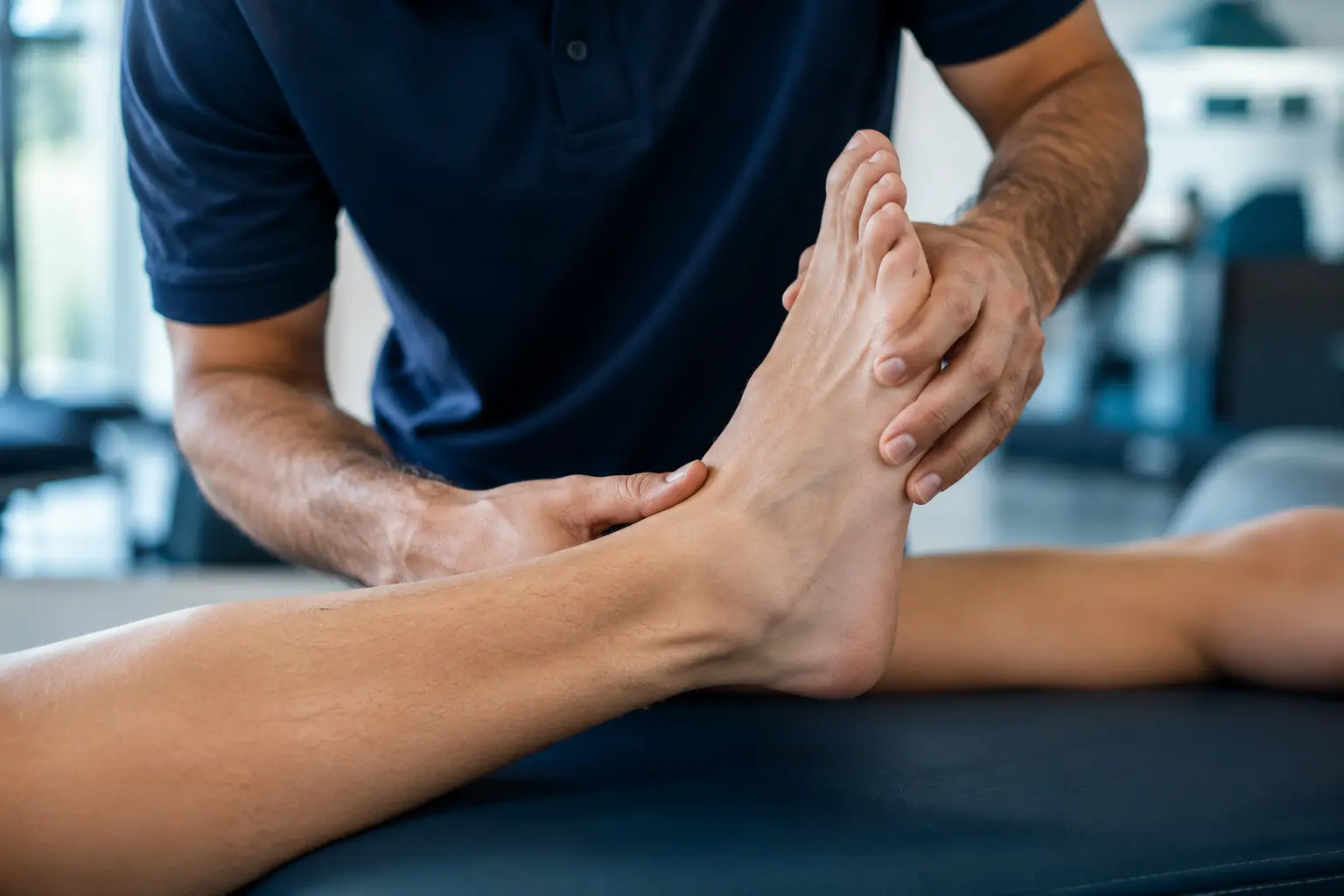
Accurate diagnosis is the foundation of effective sports injury management. Our Geelong sports physiotherapists conduct thorough clinical assessments using validated orthopaedic tests, movement analysis and detailed history-taking to identify the specific structure or structures involved and the severity of injury.
In our experience, rushing this assessment phase or treating based on assumed diagnosis is one of the most common reasons athletes remain injured longer than necessary. We take the time to understand not just what is injured, but why it happened and what needs to change for you to remain injury-free after your return to sport. When imaging is required, we provide referral guidance and can liaise with your GP or specialist to ensure the correct investigations are ordered efficiently.

Return to Sport
Return to Sport Rehabilitation Programs
Returning to sport after injury is not simply a matter of being pain-free. True return-to-sport readiness requires that you have restored the strength, power, neuromuscular control, sport-specific fitness and psychological readiness that your chosen activity demands, and that these have been verified against objective criteria before you resume competition.
Our return-to-sport programs incorporate validated functional testing appropriate to your injury and sport. For lower limb injuries, this may include the single-leg hop test, Y-balance assessment and sport-specific agility tasks. For upper limb injuries in throwing or overhead athletes, return-to-throwing progressions and shoulder strength symmetry testing are standard. Learn more about our structured sports injury rehabilitation programs.
Why Choose us
Why Choose Our Geelong Sports Physio Team?
Every physiotherapist at our Geelong clinic holds current AHPRA registration and maintains active membership with the Australian Physiotherapy Association (APA). Our team brings genuine sporting experience to their clinical work — they train here, compete here and understand the physical and psychological demands of being an athlete in Geelong. We don’t just want you to recover — we want you to come back stronger and less injury-prone than before. Sports physiotherapy Geelong athletes trust should be clinically rigorous and individually designed, and that’s the standard we hold ourselves to.
AHPRA-Registered Sports Physiotherapists
Qualified, registered and accountable.
Evidence-Based Rehabilitation Protocols
Our programs are grounded in current clinical research.
Sport-Specific Knowledge
We understand the demands of AFL, netball, running, cycling and triathlon.
Objective Return-to-Sport Criteria
We use validated functional testing, not subjective assessment alone.
Same-Week Appointments
Because acute injuries don’t wait weeks for a booking.
Accepted WorkCover & TAC Provider
For sport-related injuries with a funding entitlement.
Meet our Geelong physiotherapy team or contact us to book your sports physiotherapy assessment today.
Common questions
Frequently Asked Questions — Sports Physiotherapy Geelong
Can’t find your answer? Call our team — we’re happy to help before you book.
This information is general in nature. Your physiotherapist will assess your specific injury and develop a personalised treatment plan based on clinical findings.
Book Your Sports Physio Appointment in Geelong
Same-week appointments available Monday to Saturday. No referral required for most services. Our reception team will match you with the right sports physio for your sport and injury.