Sports Injury Rehabilitation Geelong | Return to Sport Programs
Sports Injury Rehabilitation Geelong | Return to Sport Programs
Effective sports injury rehabilitation Geelong athletes need goes well beyond resting until pain disappears. Returning to sport too soon without restoring strength, neuromuscular control and sport-specific fitness is the most common driver of reinjury. At Physio Geelong Clinic, our AHPRA-registered physiotherapists design and supervise structured rehabilitation programs for athletes from Belmont, Armstrong Creek, Highton, Newtown and Waurn Ponds, using phased protocols and validated return-to-sport testing to confirm readiness before you resume competition.
Sports Injury Rehabilitation Geelong
What Is Sports Injury Rehabilitation?
Sports injury rehabilitation Geelong physiotherapists provide is the structured process of restoring physical function, strength, movement and sport-specific capacity after an injury. This physio rehabilitation process has the goal of safe, complete return to sport and long-term injury prevention.
It is distinct from initial treatment in both scope and duration. Where acute physiotherapy addresses pain, swelling and early mobility, rehabilitation addresses the full progression from injury to sport — including the muscle strength, power, agility and neuromuscular control that must be rebuilt before safe return to competition. In our experience delivering sports injury rehabilitation programs across Geelong, the athletes who achieve the best long-term outcomes are those who complete their full rehabilitation program rather than stopping when pain resolves.
How we work
Our Phased Rehabilitation Approach
We use a phased rehabilitation model that progresses athletes through sequentially demanding stages based on objective criteria, not time alone. Each phase has specific goals and measurable targets that must be met before progression.
1
Pain & Swelling Control
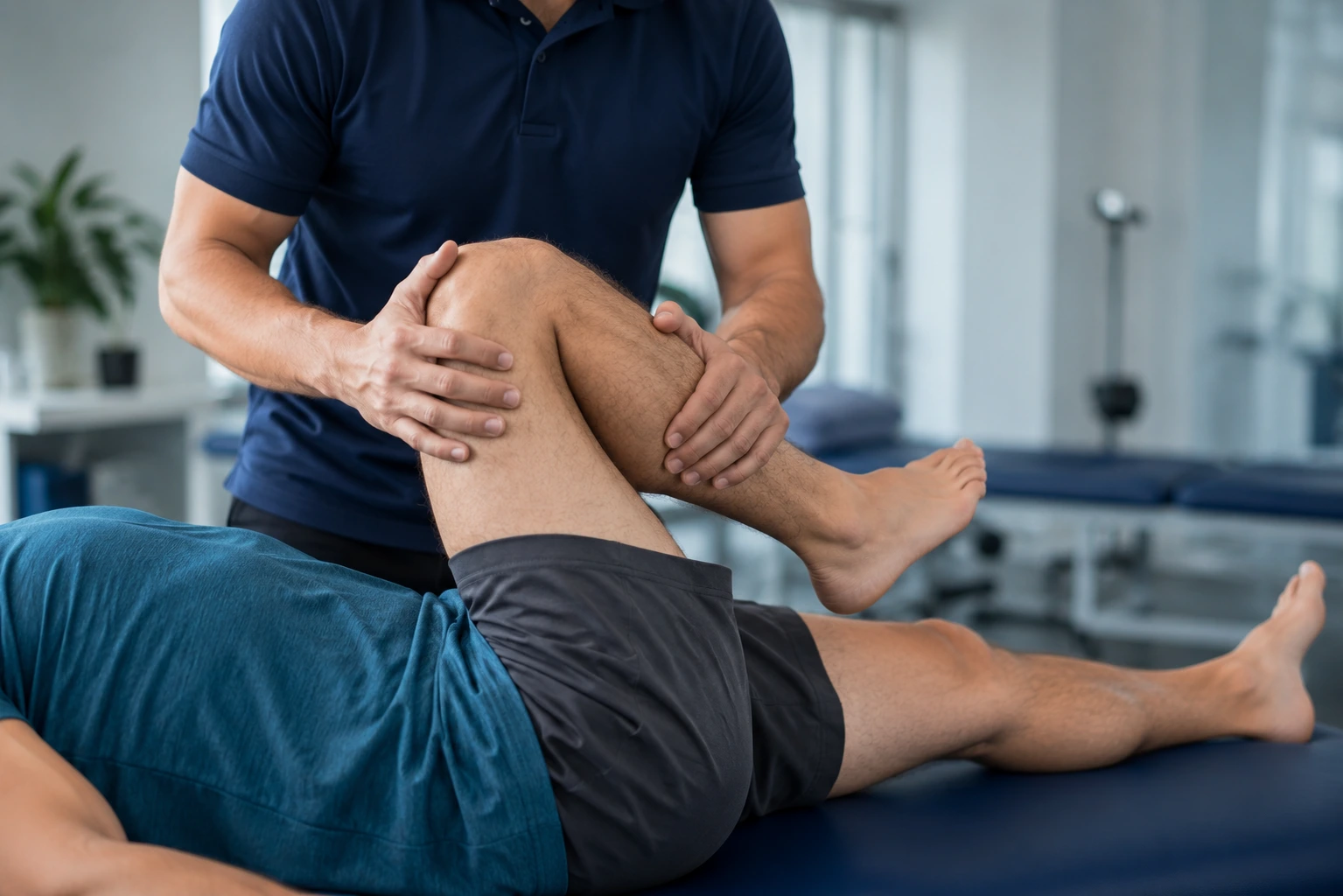
Managing acute symptoms while maintaining the range of motion and cardiovascular fitness that can be preserved without aggravating the injury — manual therapy, ice and compression protocols, and early range-of-motion exercises.
2
Range of Motion & Strength
Restoring full joint range of motion and beginning progressive loading of the injured tissue, with strength exercises gradually increasing in intensity and complexity.
3
Sport-Specific Conditioning
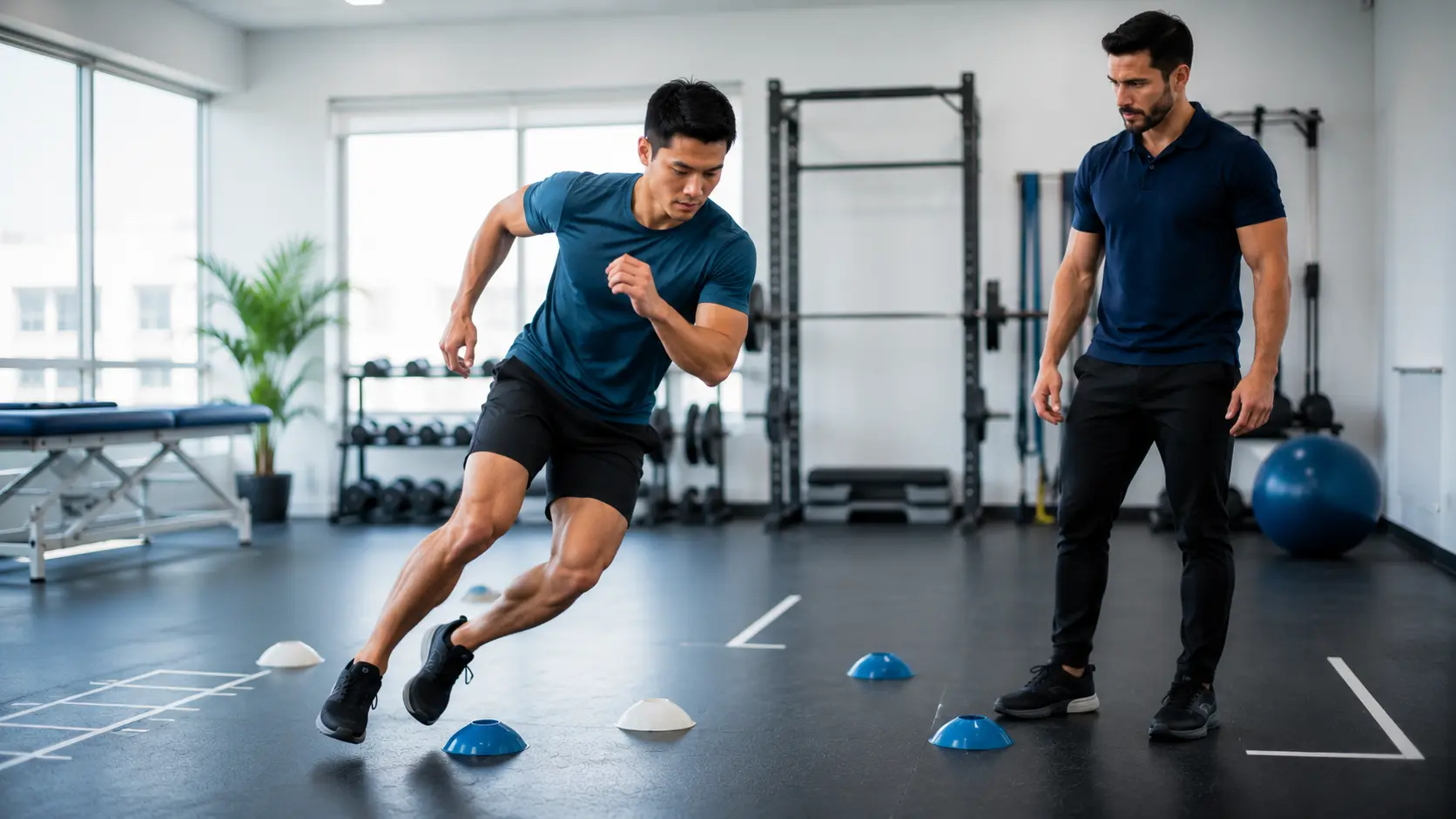
Introducing movements that increasingly replicate the mechanical demands of your sport — running progressions, change-of-direction drills, reactive movements and contact scenarios.
4
Return to Full Training
Full training integration with objective functional testing to confirm the rehabilitated limb or structure meets the strength, power and movement benchmarks required for safe return.
Injuries We Treat
Injuries We Rehabilitate in Geelong
Our physiotherapy team manages comprehensive rehabilitation programs for a wide range of sports injuries. Below are the most common presentations we work with.
🦵
ACL Rehabilitation Geelong
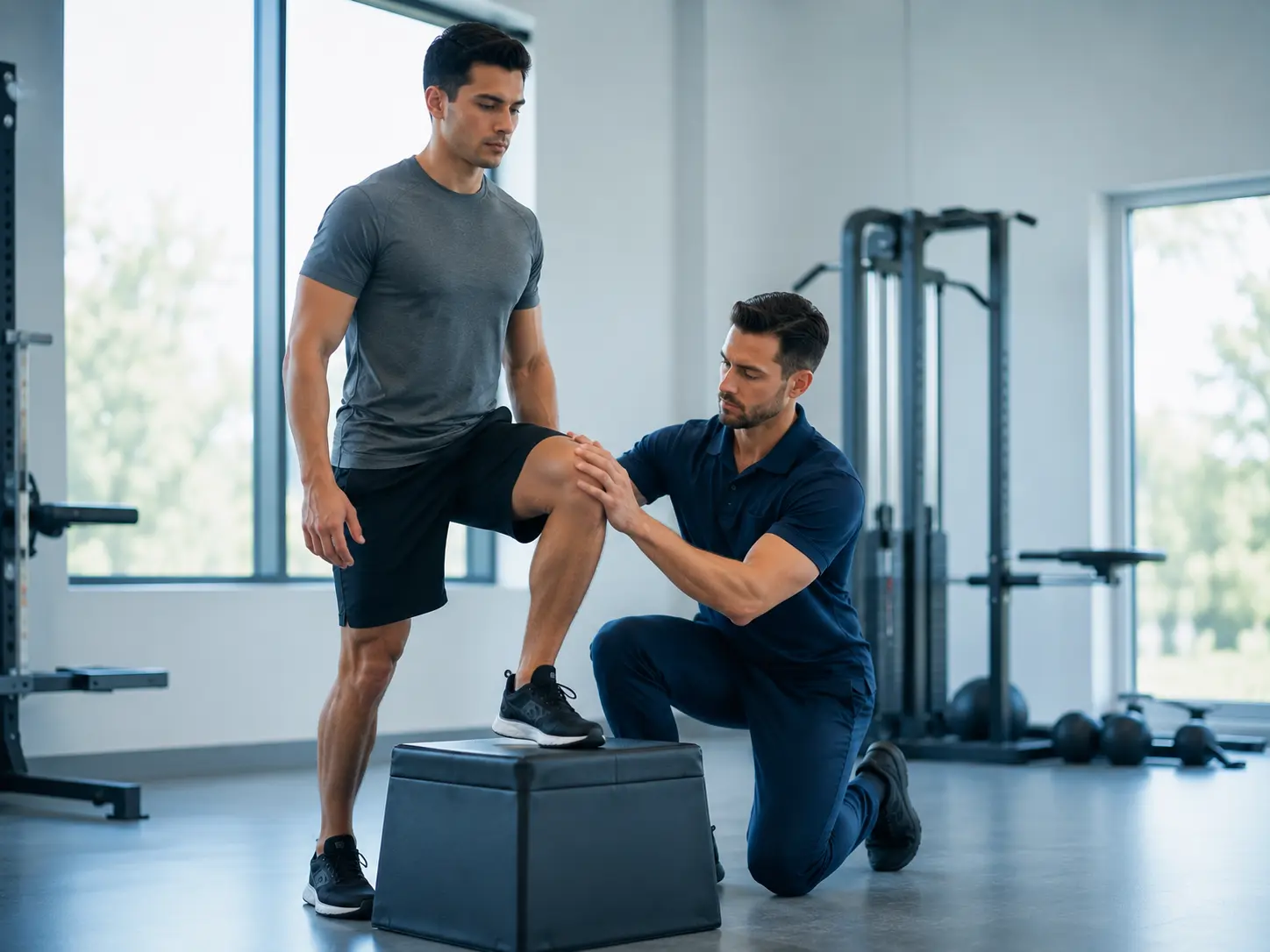
For athletes managing ACL injuries, our rehabilitation programs cover both conservative (non-surgical) management and structured pre-operative prehabilitation, building quadriceps strength, range of motion and neuromuscular control before surgery to significantly improve post-operative outcomes. ACL reconstruction rehabilitation is one of the most time-intensive and high-stakes rehabilitation programs in sports physiotherapy. Evidence-based ACL rehabilitation programs typically span nine to twelve months from surgery to return to full competition, and involve progressive strength, power, agility and psychological readiness testing at key milestones. Our ACL programs incorporate the Limb Symmetry Index, single-leg hop testing and sport-specific functional screening to confirm return-to-sport readiness based on data, not arbitrary time frames. We work closely with your orthopaedic surgeon and physiotherapy team throughout the process. For post-ACL reconstruction rehabilitation following surgery, visit our dedicated post-surgical physio Geelong page.
🤚
Shoulder Dislocation Rehabilitation
Shoulder dislocation rehabilitation requires careful management of the joint stability deficit that persists after an acute dislocation or surgical stabilisation. Our programs progress from early movement and rotator cuff activation through to full overhead loading, throwing progressions and contact sport preparation. For athletes who have undergone labral or Bankart repair, we coordinate closely with your surgeon’s post-operative protocol to ensure rehabilitation is appropriately timed and loaded at each stage.
🦶
Ankle Injury Rehabilitation
Ankle ligament injuries — particularly lateral ankle sprains — are among the most undertreated injuries in sport. Thorough rehab of ankle sprains addresses not just ligament healing but the balance, proprioception and neuromuscular control deficits that persist even after pain resolves. Inadequate rehabilitation following an ankle sprain significantly increases recurrence risk and can lead to chronic ankle instability. Our rehabilitation programs address not just the ligament healing phase but the balance, proprioception and neuromuscular control deficits that persist even after pain resolves. Sport-specific ankle stability and agility work is incorporated in the later phases before return to play.
💪
Hamstring Rehabilitation
Hamstring strains carry a high recurrence rate, particularly in football codes and track athletics. Our hamstring rehabilitation programs are built around evidence-based protocols incorporating progressive eccentric loading including the Nordic Hamstring Exercise and loaded lengthened-position exercises that are associated with reduced reinjury rates. Return-to-sport criteria include achieving target strength levels relative to the uninvolved limb and demonstrating adequate capacity in sprint-speed and change-of-direction tasks.

Functional Testing
Return to Sport Criteria & Functional Testing
Return-to-sport clearance at our Geelong clinic is based on objective functional testing, not pain alone. An athlete who is pain-free is not necessarily ready to return to sport — significant strength, power and movement control deficits may persist long after pain resolves, creating substantial injury risk without objective screening.
Our rehabilitation physiotherapists use validated testing batteries including single-leg hop tests (single hop, triple hop, crossover hop, 6m timed hop), the Y-Balance Test, isokinetic or dynamometer strength assessment, and sport-specific movement screening. Criteria thresholds are set based on published evidence for each injury type. Athletes who do not meet the criteria receive targeted additional work before retesting. This approach protects athletes from premature return and gives them the confidence of objective clearance when they do return to competition. Sports injury rehabilitation Geelong athletes undergo at our clinic is always criteria-based, not time-based. Learn more about our broader sports physiotherapy services.
Strength & Conditioning
Strength & Conditioning During Rehabilitation
Progressive strength and conditioning work is integrated into rehabilitation from Phase 2 onwards. Building tissue capacity — the ability of muscles, tendons and joints to tolerate the loads of sport — is one of the primary drivers of successful rehabilitation outcomes and reduced recurrence risk.
Our physiotherapists prescribe strength programs using evidence-based loading parameters: sets, reps, tempo and resistance are selected based on your rehabilitation phase and physiological goals. Load is progressed systematically using the principle of progressive overload. Strength deficits that persist beyond the rehabilitation period significantly increase injury risk. Our programs are designed to fully resolve them, not merely reduce them.
Prevention
Injury Prevention Programs Geelong
After completing sports injury rehabilitation Geelong athletes are encouraged to continue with a structured injury prevention program incorporating exercise rehabilitation treatment to build long-term resilience. This is particularly important for athletes with a history of the injury type that brought them to physiotherapy — recurrence rates for hamstring strains, ankle sprains and ACL ruptures all remain elevated in athletes who have been previously injured.
Our prevention programs are designed around the specific risk profile of your sport and your individual biomechanical and conditioning profile. For team sports, we can work with coaches and conditioning staff to integrate evidence-based prevention exercises such as the FIFA 11+ warm-up protocol for football into training schedules. Contact our team to discuss individual or group prevention program options. Book an appointment or learn more about our team.
Common questions
Frequently Asked Questions — Sports Injury Rehab Geelong
Can’t find your answer? Call our team — we’re happy to help before you book.
This information is general in nature. Your physiotherapist will assess your specific injury and design a rehabilitation program appropriate to your condition, goals and sport.
Book Your Sports Injury Rehabilitation Assessment
Same-week appointments available Monday to Saturday. No referral required for most services. Our reception team will match you with the right sports physio for your sport and injury.